

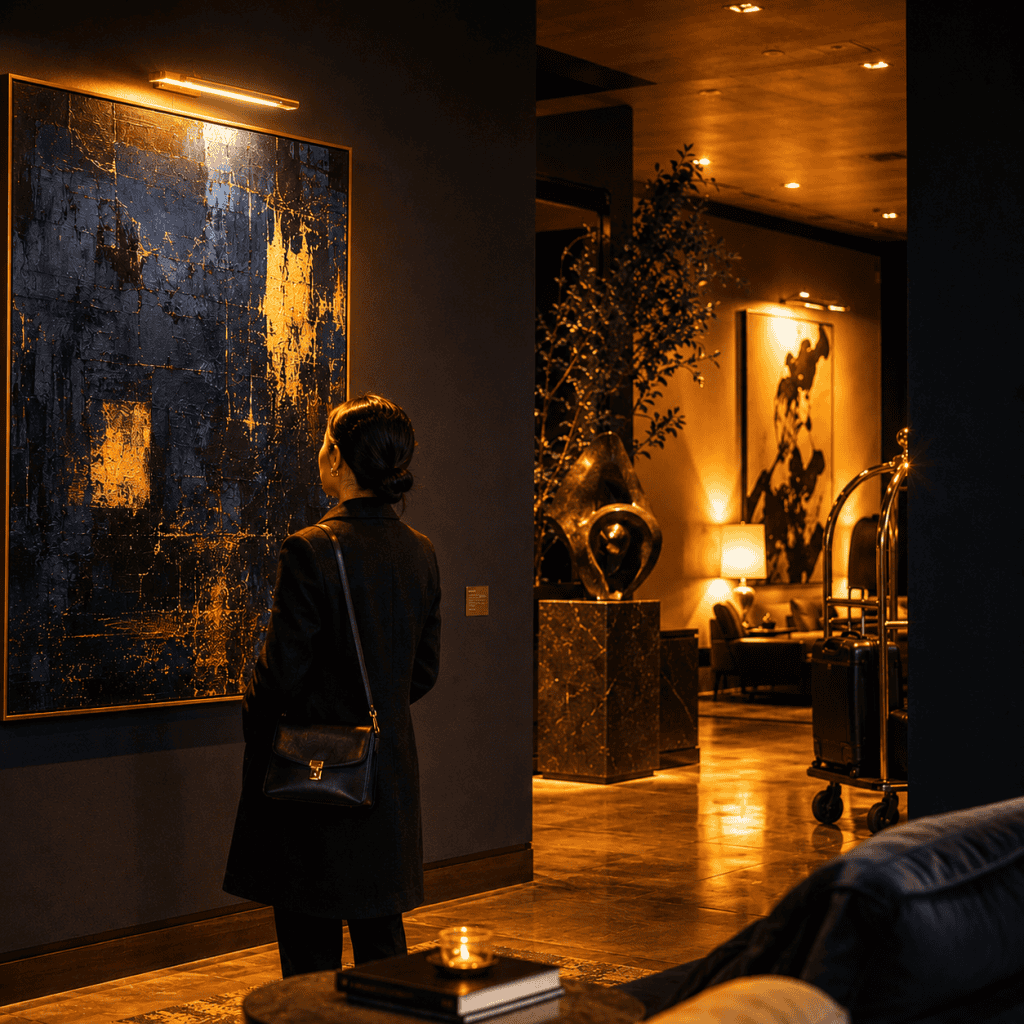
Walk into a truly design-led boutique hotel and you can feel it before you can name it. The colors seem softer, the light feels considered, and the art on the walls quietly sets the tone for how you’ll move through the day. The best hotels don’t treat artwork as decoration; they use it to shape how you experience the space, the city, and even your own time away.
At The Ivory, our art and design choices are as intentional as our hospitality rituals. Here’s a look behind the scenes at how hotels like ours curate collections that don’t just fill walls—but change the mood of your stay.
Why Art Matters in a Boutique Hotel
Design-led boutique hotels and quiet luxury accommodations have an advantage: they can be personal. Without the constraints of a brand standard, every piece of art can be chosen to support a feeling rather than a formula.
Thoughtful art curation can:
- Set the emotional temperature of a room, from energizing in public spaces to calming in guest rooms.
- Create a sense of place, connecting you to the neighborhood’s architecture, culture, and history.
- Encourage slower, more mindful travel, inviting you to notice small details instead of rushing through the city.
In a city as layered as Los Angeles—with its blend of old theaters, modernist homes, street art, and hidden galleries—art becomes a way to carry that narrative into the hotel itself.
Starting With Mood, Not a Theme
Many hotels begin with a theme: coastal, mid-century, Hollywood glamour. Design-led hotels tend to begin somewhere quieter—by asking, How do we want guests to feel?
At The Ivory, we designed the hotel to feel residential and reassuringly calm, even while sitting in the heart of Koreatown. That feeling guided every decision:
- Warm, softened palettes in guest rooms that invite you to exhale the moment you close the door.
- More texture than gloss, pairing plaster, linen, and natural woods with artwork that feels collected over time rather than purchased in bulk.
- Quietly graphic pieces in corridors and public spaces that bring structure and rhythm without overwhelming the senses.
The goal is not to impress at first glance, but to gently shift your state of mind—so you sleep better, linger a little longer over coffee, and feel more connected to the city just outside the doors.
Curating a Sense of Place: Los Angeles, Room by Room
A thoughtful art collection in a boutique hotel should reflect its neighborhood as clearly as its interiors. In Koreatown, the energy is cinematic—late-night restaurants, neon, historic buildings, and a convergence of cultures. Rather than literal cityscapes, design-led hotels often interpret this spirit more subtly.
You might notice:
- Abstract references to Los Angeles architecture: forms that echo the clean lines of mid-century homes in the Hollywood Hills or the arches and facades of historic Wilshire Boulevard.
- Color stories inspired by the city’s daily light: sunrise over Griffith Observatory, the muted tones of morning fog, or the saturated gold of a West Hollywood sunset viewed from a rooftop hotel terrace.
- Pieces by local and emerging artists whose practices are shaped by neighborhoods like Silver Lake, Downtown Los Angeles, or Mid-Wilshire.
In this way, art becomes a quiet introduction to the city. Before you visit LACMA or the Academy Museum, you’ve already experienced a curated, intimate version of Los Angeles within the hotel.
Layering Art Through the Guest Journey
Design-led hotels think about art as a narrative that unfolds from arrival to bedtime, not as isolated moments.
Arrival and lobby
This is where energy matters most. Artwork near the entrance and in the lobby often feels more graphic or architectural—setting a confident, urban tone without feeling cold. It helps announce that you’re in a design hotel in Los Angeles, not just any lobby in any city.
Corridors and transitions
These are liminal spaces, so the art tends to be quieter and more rhythmic—series, studies, or works that repeat forms and colors. They guide you gently to your room, creating a sense of continuity rather than visual noise.
Guest rooms
Here, the art has a different job: to make you feel at home. Instead of bold statement pieces, you’ll often find:
- Framed works that feel like they could belong in a well-loved apartment.
- Calmer compositions that invite rest rather than demand attention.
- Pieces placed in conversation with natural light or a particular vantage point—above the bed, near a lounge chair, or opposite the window.
The result is a space that feels curated but never staged; considered, but never precious.
Art as a Companion to Daily Rituals
The most meaningful design hotels don’t just place art on the walls; they weave it into daily rituals that slow you down and help you reconnect.
At The Ivory, our day is punctuated by simple, sensory experiences—complimentary morning coffee and artisan bread, warm evening cookies, and even twenty-four-hour Kaluga caviar service. Around these moments, the art is intentionally gentle and human-scaled:
- Morning light revealing subtle textures in artworks near the contemporary cocktail bar as you sip your first coffee.
- The glow of the courtyard pool reflecting onto sculptural pieces that feel almost like part of the landscape.
- Intimate works near seating on the open-air rooftop terrace, mirroring the city’s skyline without competing with it.
These details encourage you to linger—to look up from your phone, notice the composition on the wall, feel the weight of the day ease off your shoulders.
How Guests Can Engage with Hotel Art More Deeply
You don’t need to be an art expert to appreciate a thoughtfully curated hotel collection. A few simple shifts can change how you experience your stay:
- Pause for ten seconds in front of one piece that catches your eye in the lobby or corridor. Notice color, line, and how it makes you feel.
- Ask the front desk about the art. In independent design hotels, someone on the team can often share the story of a local artist or the inspiration behind a particular piece.
- Follow the thread into the city. If a work references modernist architecture, visit a mid-century home tour. If a photograph captures a corner of Downtown Los Angeles, add it to your walking route.
In this way, the art in your hotel room becomes a starting point for deeper, more neighborhood-focused travel, extending your experience well beyond typical tourist itineraries.
Staying Where the Details Matter
In an era of grand lobbies and oversized gestures, the hotels that stay with you are often the ones that feel most personal. Art is one of the quietest, most powerful ways design-led boutique hotels shape that feeling—guiding your mood, connecting you to the city, and turning a stay into an experience.
If you’re planning a design-focused, neighborhood-driven trip to Los Angeles and you value spaces that feel both curated and comfortable, discover The Ivory in Koreatown—an independent boutique hotel where every detail is chosen to help you feel at home in the city.