

Design That Feels Like Home: The Case for Residential‑Scale Hospitality
For many travelers, “design hotel” once meant dramatic lobbies, soaring ceilings, and statement furniture meant to impress from the first step inside. Beautiful, yes—but not always comfortable. Today, a different kind of quiet luxury is emerging: residential‑scale hospitality that feels more like stepping into a thoughtfully designed home than a grand, anonymous property.
At The Ivory, our boutique hotel in Koreatown, Los Angeles, every design decision is guided by one simple question: how will this make our guests feel? Not on a brochure, but at midnight when they’re trying to sleep, or over a second drink when the conversation starts to deepen.
Below, we share how proportion, lighting, acoustics, and art curation—often overlooked details—shape the way you rest, connect, and experience the city in any design‑led hotel.
Why Residential Scale Matters in a Design Hotel
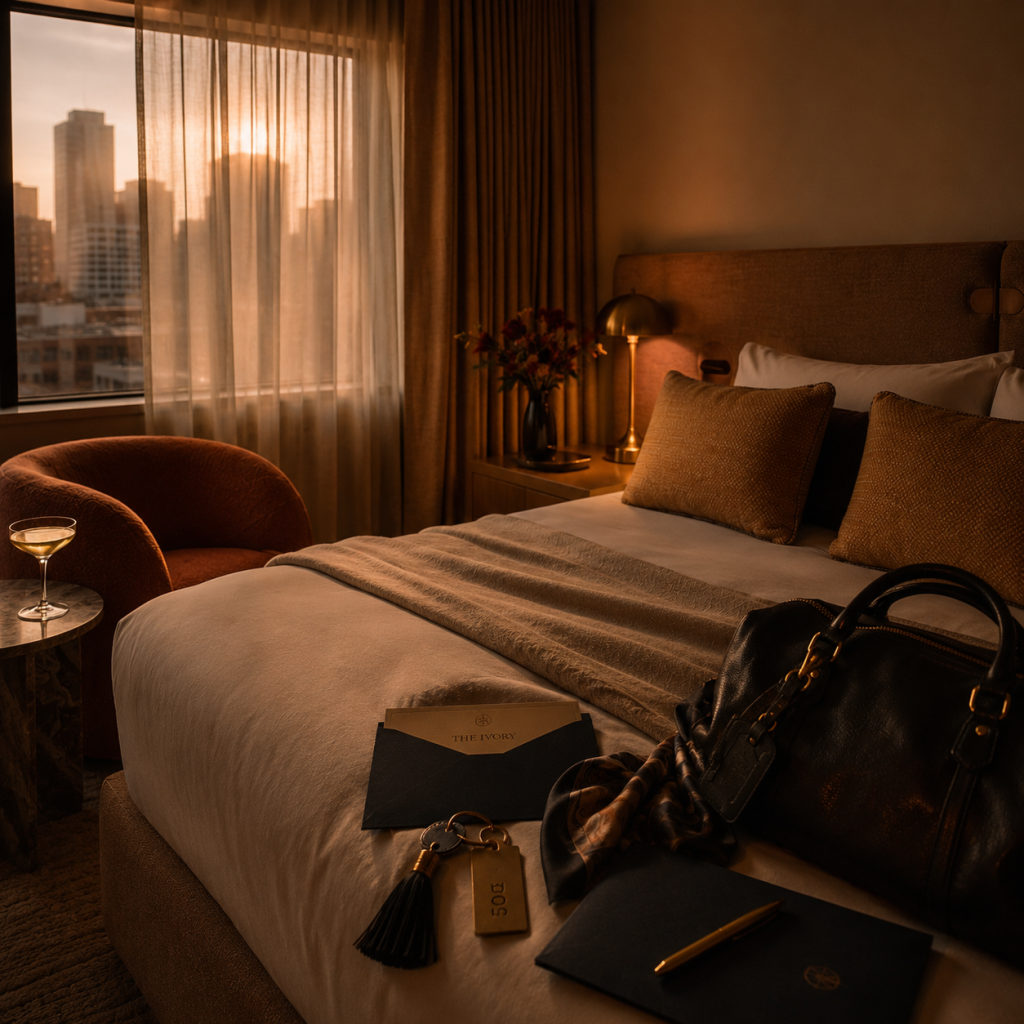
Residential‑scale hospitality borrows the best of home design—human proportions, warm materials, layered lighting—and brings it into a hotel environment. The result is a space that feels:
- Intuitive instead of intimidating
- Quietly luxurious instead of performative
- Intimate enough for connection, yet spacious enough to breathe
For travelers comparing boutique hotels or design hotels in Los Angeles, paying attention to scale can reveal a lot about how you’ll actually feel during your stay.
Proportion: The Hidden Architecture of Comfort
Good proportion is something you feel more than you see. It shapes how your body and mind relax the moment you enter a room.
Right‑Sized Spaces for Real Life
In residential‑scale hotels, public spaces are intentionally edited:
- Lobbies feel like living rooms, not train stations. Seating is arranged in smaller clusters so you can comfortably talk, read, or work without feeling watched.
- Guest rooms prioritize flow, with clear walking paths, surfaces where you naturally need them, and furniture scaled to human use—not oversized for dramatic photos.
At The Ivory, this philosophy guided everything from the depth of our sofas to the spacing between dining chairs on the rooftop terrace. When proportions match the way people truly live, you move more easily, sleep more soundly, and feel less like a guest in a spectacle.
Better Proportion, Better Sleep
Thoughtful scale plays directly into rest:
- Bed placement considers sightlines so you don’t wake staring at a hallway door.
- Nightstands sit at a comfortable height, with lighting and outlets exactly where you reach for them.
- Storage is generous but discreet, allowing you to unpack and settle in without crowding the room.
The result: a space where your body can finally exhale—essential for jet‑lagged arrivals, romantic getaways, or longer stays exploring Los Angeles.
Lighting: Setting the Rhythm of Your Stay
Lighting is one of the most powerful tools in design‑led hotels—and one of the least talked about. The difference between harsh overhead light and thoughtfully layered illumination is the difference between feeling “checked in” and feeling at home.
Layers, Not Floodlights
Residential lighting is layered: ambient, task, and accent. In a well‑designed boutique hotel, you should find the same:
- Ambient light that fills the room softly without glare
- Task lighting at the bed, desk, and vanity for reading or working
- Accent lighting that highlights art, architecture, and texture
At The Ivory, warm temperature bulbs and dimmable fixtures let you gradually wind down from rooftop cocktails to bedtime, rather than flipping from bright white lobby light to darkness.
Light That Supports Sleep and Connection
Thoughtful lighting design translates directly into experience:
- Better sleep: Warmer evening lighting helps cue your body to rest, especially if you’ve been out at places like LACMA, the Academy Museum, or a game at Crypto.com Arena.
- Easier conversation: Softer, lower lighting in our cocktail bar and courtyard pool area allows for eye contact and intimacy. You’re not under a spotlight; you’re in a mood.
- Deeper connection to the city: On our open‑air rooftop terrace, lighting is intentionally subtle so Los Angeles becomes the focal point—skyline silhouettes, the glow of Koreatown, and the feeling of being surrounded by the city, not separated from it.
Acoustics: The Quiet Luxury You Can’t Photograph
If lighting shapes the mood, acoustics shape the sense of refuge. Design hotels that feel welcoming pay as much attention to sound as to visuals.
Intimacy Through Sound
In residential‑scale spaces, acoustic decisions are deliberate:
- Soft materials, layered textiles, and thoughtful ceiling treatments absorb echo.
- Music is curated to complement, not compete, with conversation.
- Public areas are divided into zones, so a lively bar can coexist with a calm corner.
At The Ivory, acoustics were considered from the earliest stages of our transformation. The goal: you can whisper by the pool at night, talk comfortably in the bar without raising your voice, and sleep without being reminded you’re in the center of Los Angeles.
Quiet That Feels Natural, Not Sterile
Silence in a city hotel is unrealistic—and not always desirable. You came to Los Angeles to feel its energy. Instead of eliminating sound, residential‑scale hospitality softens and frames it:
- Gentle ambient noise in the lobby as guests come and go
- The low murmur of conversation on the rooftop as the city hums below
- The soft clink of glassware in the bar, never sharp or jarring
This is quiet luxury in practice: an acoustic environment that restores you without disconnecting you from the life of the city.
Art Curation: A Local Lens on the City
Art is often treated as decoration. In a design‑led boutique hotel, it’s a narrative device—a way to help you understand where you are.
From Decoration to Dialogue
Thoughtful art curation does more than fill a blank wall:
- It reflects the architecture, neighborhoods, and culture around you.
- It introduces local artists, photographers, and designers, inviting you to see Los Angeles through their eyes.
- It encourages you to linger, notice, and ask questions.
At The Ivory, our collection is intentionally diverse and quietly layered. Pieces nod to Koreatown’s history, the geometry of Mid‑Wilshire’s modernist buildings, and the cinematic light of the city—from Griffith Observatory at dusk to the streets of Silver Lake at golden hour.
Art as a Guidebook
Curated art can also act as a subtle guide to the city:
- A photograph might lead to a recommendation for a nearby gallery in Downtown Los Angeles.
- A painting’s color palette might mirror the tones of an early‑morning hike to Griffith Park or an evening in West Hollywood.
- A sculptural piece might spark a conversation with our team that turns into a personalized itinerary.
You don’t need a brochure when the walls quietly remind you where you are and why it matters.
Experiencing Los Angeles Through Residential‑Scale Design
Ultimately, residential‑scale hospitality is less about being impressed and more about being understood. When proportion, lighting, acoustics, and art work together, you:
- Sleep better, because your room is designed around human rhythms, not spectacle
- Connect more easily, because spaces invite conversation instead of performance
- Feel a deeper sense of place, because design and curation reflect the city around you
At The Ivory in Koreatown, these principles shape everything—from complimentary morning coffee and artisan bread in our courtyard to warm evening cookies enjoyed under soft rooftop light, to our 24‑hour Kaluga caviar service shared quietly back in your room. Each ritual is simple by design, creating space for the experiences that linger long after checkout.
If you’re planning a stay in Los Angeles and looking beyond traditional luxury hotels, we invite you to explore The Ivory—a design‑led boutique hotel where residential‑scale spaces, thoughtful details, and genuine hospitality help you feel instantly at home in the heart of the city.