

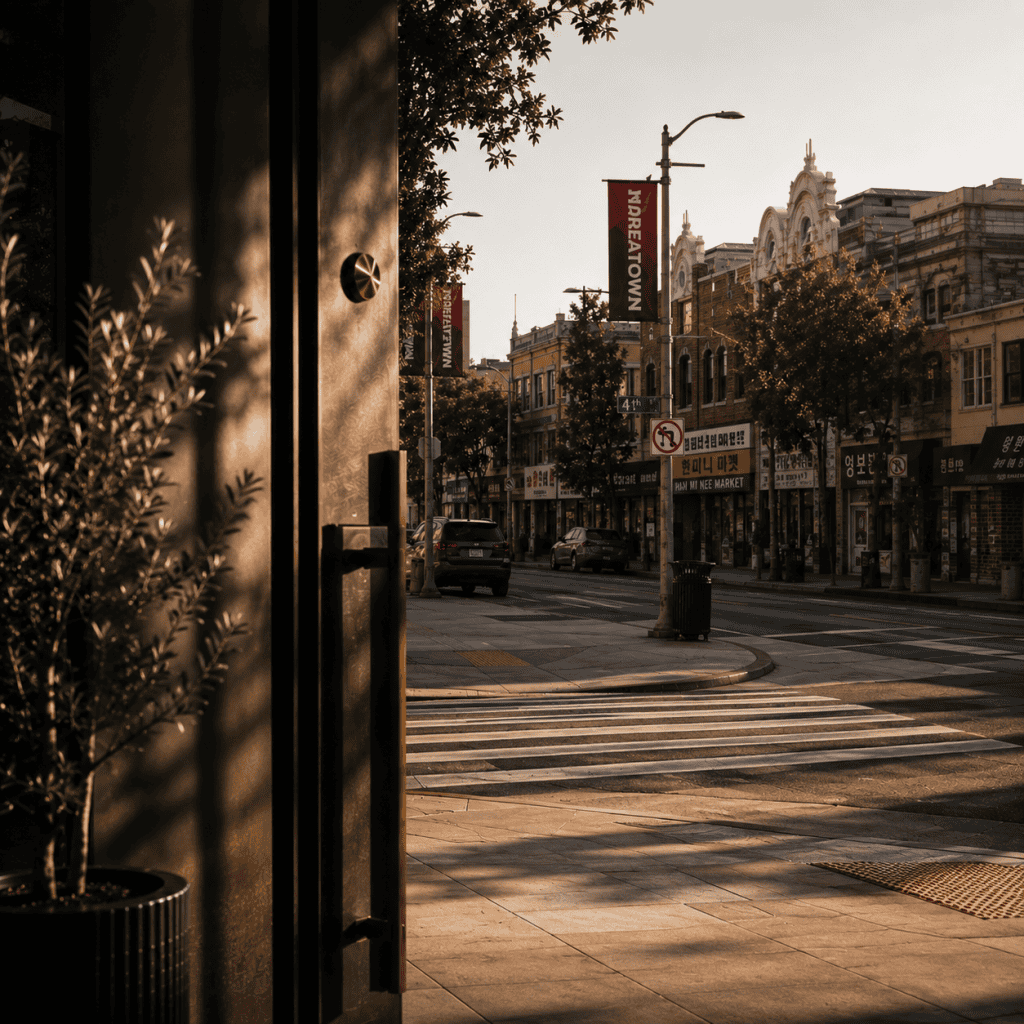
A Local’s Guide to Koreatown Beyond Barbecue
Koreatown is often described in headlines as “the place for Korean BBQ,” but locals know it as something far more layered: a dense, walkable neighborhood where architecture, late-night cafés, independent galleries, and under-the-radar bars live side by side.
Staying at a central, design-led boutique hotel in Koreatown places you within a few walkable blocks of some of Los Angeles’ most intriguing discoveries—many of which rarely make the standard tourist list. This guide is designed for curious travelers who want to wander like locals, order with confidence, and time their evening so the neighborhood quietly reveals itself.
Start With the Streets: Where to Wander First
Koreatown is compact by Los Angeles standards, which makes it ideal for travelers who prefer to explore on foot and by rideshare rather than spend the day in traffic.
Anchor yourself along Wilshire & 6th Street
From a central Koreatown hotel, you’re within easy reach of:
- Wilshire Boulevard – Historic towers, classic theaters, and a glimpse into LA’s early 20th-century ambition.
- 6th Street & Normandie/Oxford – Lined with intimate cafés, dessert shops, and late-night spots that stay open long after other neighborhoods wind down.
- Olympic Boulevard – Less polished, more local, and home to small eateries that feel like true neighborhood institutions.
Walk slowly. Koreatown is best absorbed at street level: hand-painted signage, narrow alleyways hiding bars, and buildings that reveal new details at each corner.
Architectural Gems Hiding in Plain Sight
If you love design, Koreatown offers an unexpected architectural tour within a few city blocks.
The Wilshire Boulevard Icons
-
The Wiltern Theatre (Wilshire & Western)
A striking example of Art Deco design, wrapped in green terracotta. Even if you’re not catching a show, stand across the street to take in the vertical lines and intricate detailing. Visit just before sunset for soft light that accents the façade. -
Bullocks Wilshire Building (near MacArthur Park)
Once a luxury department store, this historic landmark now houses a law school, but its exterior still whispers old-Hollywood glamour. Look up: the setbacks, tower, and copper details capture a period when Wilshire rivaled Hollywood Boulevard.
Residential Details & Hidden History
On side streets branching from Wilshire and 6th, you’ll find 1920s courtyard apartments, mid-century office buildings, and modest storefronts that have been thoughtfully repurposed. It’s here that Koreatown feels most like a living archive—a blend of old LA and modern Korean culture.
For design-minded guests, a slow loop around Wilshire–6th–Olympic–Western paints a richer picture of the city than any single landmark could.
Cafés That Reward Lingering, Not Rushing
In Koreatown, cafés are more than places to grab a quick coffee; they’re where friends linger for hours, first dates stretch into late-night conversations, and solo travelers feel quietly at home.
What to Order
Many spots specialize in drinks and desserts that feel like small rituals:
- Dalgona lattes & specialty coffees – Look for house-roasted espresso with subtle sweetness and a carefully styled presentation.
- Bingsu (Korean shaved ice) – Shared at the table, topped with matcha, injeolmi (roasted soybean powder), or fresh fruit.
- Honey toast & soufflé pancakes – Light, layered, and designed for slow bites between conversations or pages of a book.
Arrive midafternoon—around 3 or 4 p.m.—when the neighborhood shifts from daytime errands to evening anticipation. It’s a natural pause between museum visits in Mid-Wilshire or West Hollywood and the rest of your night in Koreatown.
Beyond BBQ: Where (and What) to Eat
You don’t have to skip barbecue altogether; you simply don’t need it to define your experience.
Comfort Dishes Locals Crave
Look for restaurants specializing in:
- Soondubu jjigae – Silken tofu stew, bubbling hot, often served with stone-pot rice and kimchi.
- Naengmyeon – Chewy buckwheat noodles in icy broth; especially refreshing after a warm day by the pool.
- Hand-pulled noodles & dumplings – Many Koreatown institutions quietly turn out some of the city’s best mandu and kalguksu.
- Korean-Chinese plates – Jjajangmyeon (black bean noodles) and tangsuyuk (crispy sweet-and-sour beef or pork) are local favorites that rarely appear on tourist lists.
Order one dish you recognize and one you don’t. Your server will usually be happy to guide you toward something seasonal or house-special.
Independent Galleries, Bookstores & Creative Corners
Koreatown’s creative energy often hides above street level—up a narrow staircase or in a modest second-floor unit.
- Small galleries & project spaces showcase emerging artists from LA and beyond, often with openings on weekends. Follow signage or ask your hotel host for the week’s exhibitions.
- Design-forward bookstores and zine shops carry art books, Korean-language titles, and independent magazines that capture the city’s evolving culture.
Visit in the early evening, around 6 or 7 p.m., when openings and events typically begin. It’s a natural bridge between your day’s exploring and a late dinner or nightcap.
How to Time Your Evening So the Neighborhood Opens Up
Koreatown comes alive in layers. To experience it fully, think of your evening in gentle chapters.
Late Afternoon (3–5 p.m.)
- Return to your hotel to reset after exploring Hollywood, LACMA, or the Academy Museum.
- Enjoy a slow swim in the heated courtyard pool or a quiet moment on a rooftop terrace as the city softens into golden hour.
- Wander out for coffee or tea, plus a shared dessert.
Twilight (5–8 p.m.)
- Stroll Wilshire to take in the changing light on historic buildings.
- Drop into a gallery or stop by a neighborhood bar for a light aperitif.
- Choose a dinner spot that focuses on one specialty—stews, noodles, homestyle dishes—rather than trying to do everything at once.
Late Night (8 p.m.–Late)
This is when Koreatown feels distinctly itself.
- Seek out a speakeasy-style cocktail bar tucked behind unmarked doors or parking-lot staircases.
- End the night at a dessert café or bakery that stays open late, with warm pastries, ice cream, or one last espresso.
- If you’re staying at a hotel that offers late-night rituals—like warm cookies or 24-hour caviar service—return “home” to extend the evening with something quietly indulgent.
Using Koreatown as Your LA Base
From Koreatown, you’re centrally placed:
- West to LACMA, the Academy Museum, Beverly Hills, and West Hollywood
- East to Downtown LA, Crypto.com Arena, and the Arts District
- North to Griffith Observatory, Los Feliz, and Silver Lake
- South to USC and Exposition Park
Spend your days exploring the broader city, then come back to a neighborhood that feels distinctly local, walkable, and alive well past midnight.
Stay Where the Neighborhood Feels Like Home
The most rewarding way to experience Koreatown is to stay somewhere that reflects its character—design-forward, quietly luxurious, and rooted in the neighborhood.
At The Ivory, our team curates personalized walking routes, café suggestions, gallery openings, and late-night stops so you can discover Koreatown beyond barbecue and beyond the usual guides.
Planning your next Los Angeles stay? Connect with The Ivory to create a Koreatown experience that feels thoughtfully local, beautifully designed, and completely your own.